A video you can publish, not AI slop
Your website, as a video.
Paste your address. We read your pages, write the voiceover for you to approve, then assemble the film from parts chosen for it: a narrator you picked, footage that was really shot, your palette, your logo, captions cut to the recorded word. Not one model guessing at a video, and nothing to learn before you have something to post.
How it works
A video you can publish, not AI slop.
Six stops, and the third one is yours. The order matters more than it looks: everything expensive happens after you have read the words. Watch her walk it.
-
01She reads your site
Up to eight of your pages, not only the homepage: the angle that actually sells, the strongest number you publish, your palette, your logo. Whatever is public - we cannot sign in to your product. Name a subject your pages do not cover and she looks that up too.
-
02She writes the script
Every line the voice will say, in order, with its timing, in a tone you chose from ten, and beside each line what it becomes on screen.
-
03You approve it
Change a line and it comes back changed. Nothing is recorded and nothing is rendered until you say go. It is the step the other tools skip, and it is why their output gets made and then quietly not used.
-
04She gathers the pictures
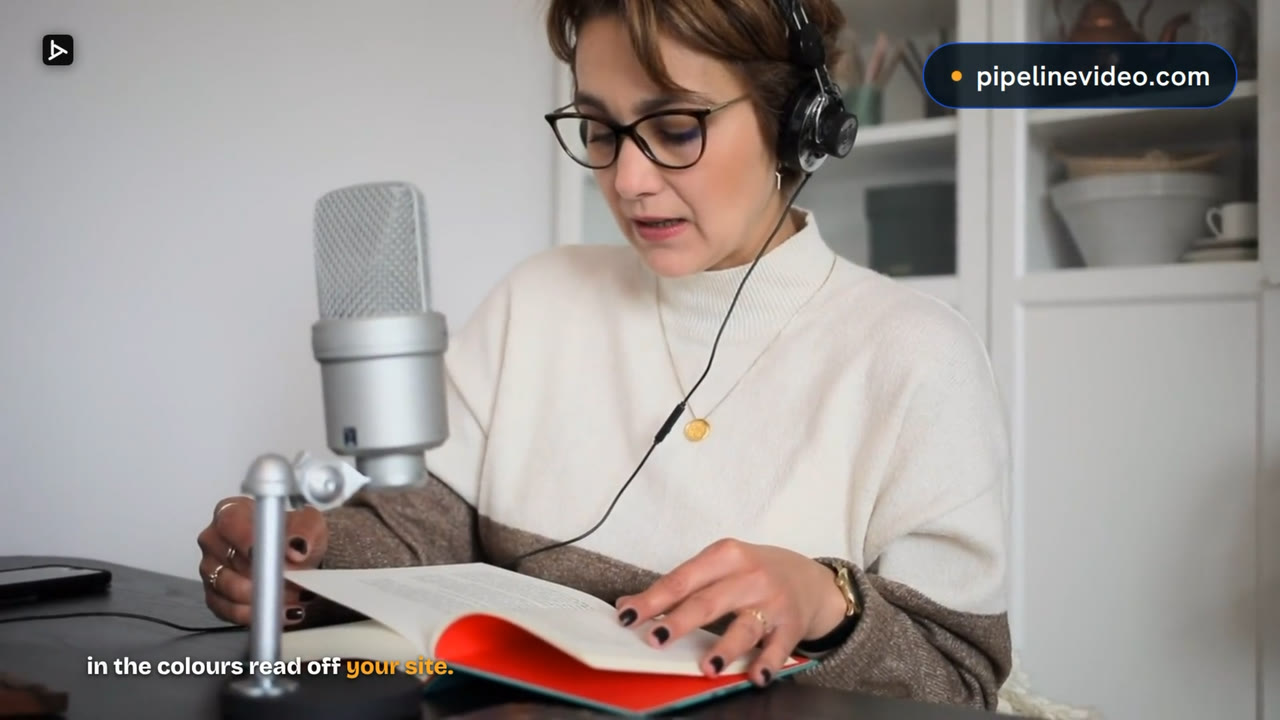
Footage that was really shot, chosen for the beat it plays under. Your own pages recorded in a browser. Typography, counters and diagrams authored to the lines, in the colours read off your site.
-
05She records the voice
A narrator you picked, five per language, recorded once for this script rather than stitched together a sentence at a time. You hear a sample before you commit.
-
06She cuts it and renders
Every cut landed on the recorded word rather than near it, captions burned in, the music sat under the narration, and an MP4 at the shape you picked.
The work
Real sites. Real videos.
Every frame below came from the company it names, and a number in the length box. Nothing was shot, nobody wrote a brief, and each script was approved before a frame was rendered.
Made by us from each company's own public pages, unrequested and unreviewed by them. None claims to represent the company in any way.


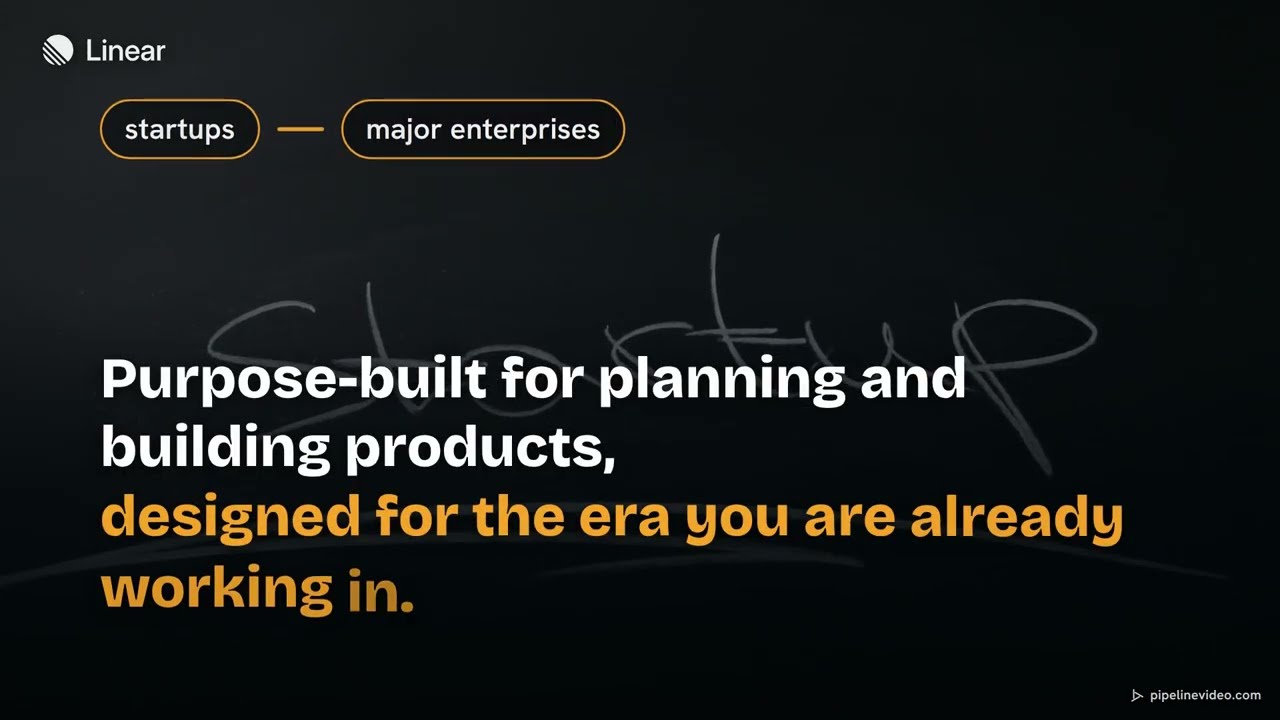

Every film we have made
Each one came from a real company's own pages, script read and approved before a frame was rendered.
-
 Pipeline Video (English)
-
 Stray Labs (English)
-
 Cal.com (English)
-
 TypeSafe (English)
-
 AuditMalin (French)
-
 Sentry (English)
-
 Linear (English)
-
 PostHog (English)
-
 Neon (English)
-
 Qdrant (Spanish)
-
 Mirakl (French)
Yours would be the same quality. Paste your address at the top of this page.
The second look
If one line lands wrong, fix that line.
Your film comes back as the scenes it is made of. Change what one says, give it more time, put something else on screen, or add a scene where you need one. It is the approval step again, on the other side of the render.
Every release
Not just your launch. Every release after it.
The launch film is the first one, not the only one. Each feature, integration and redesign gets its own, out the day it ships.
- Launch The product The angle taken off your pages, the film you put at the top of the site.
- Release The feature Thirty seconds on the one thing that shipped, out the day it ships.
- Release The integration Same voice, same palette, same closing card. Nobody has to be briefed again.
- Anytime The cut for the feed The same subject at another shape and another length, written for it rather than cropped into it.
Why the second one is easier than the first
- It sounds like the last one. House Style reads the tone you kept choosing and the lines you rewrote, so the fourth is written knowing the first three.
- Your pages are already read. Another length, language, shape or subject starts from that reading instead of paying for it twice.
- Nothing to keep warm. No retainer, no minimum, nothing to cancel. A quarter with nothing worth a video is a quarter you skip.
Technical products
A pull request is a subject. So is a schema change.
Plenty of what gets launched is aimed at people who read code, and a stock shot of a team around a laptop does not sell to them. Give us the repository and the release notes and the frames become the thing itself.
- The diff, typed in. The lines that changed land one at a time under the sentence that explains them, rather than a screenshot of a diff held on screen for four seconds.
- The terminal, running. The command goes in, the output comes back, and the part of the output that matters is the part that is still on screen when the line ends.
- The architecture, built. Boxes and arrows drawn in as each is named, so a viewer is looking at the piece being talked about and not hunting for it.
- The call and the response. Side by side, in your own field names, taken from your own documentation rather than invented to look plausible.
- The workflow, end to end. A commit, a check, a deploy, in the order your pipeline actually runs them.
No site yet, or the site is not where the product is? Point us at a public repository. We read the README, the release notes and the documentation the same way we read pages, and your own documents work too: up to ten of them, pasted or dropped in.
The shape
Every place you post has a shape.
Pick it on the form and every scene is measured into that frame before anything is drawn. Not a landscape film cropped afterwards with the type falling off both sides.
- Landscape 16:9 · 1920×1080 YouTube, your own site, a deck, an email.
- Vertical 9:16 · 1080×1920 Reels, TikTok, Shorts, Stories.
- Square 1:1 · 1080×1080 A feed post that works either way up.
A ratio we have not named works too: ask for 4:5 or a size in pixels and it is sized to cost what the three above cost to render.
The deliverable
What is actually in the film.
Six stages, twenty three lines, one sentence each. A capability that needs a paragraph is a feature nobody asked for.
Stage 1The script5
- The angle, taken from up to eight of your own pages rather than a brief you had to write.
- A tone you choose from ten, and it reaches the writing and the read, not just the wording.
- Wording timed to the length you asked for, not padded out to fill it.
- A subject your pages are silent on is looked up before the writing starts, and what came back is kept apart from what your site says.
- Your edit is the final wording, word for word.
Stage 2The voice3
- A narrator recorded for this video, not a text reader stitched together per sentence.
- Five voices per language, each with a sample you can play before you commit.
- English, French, Spanish or German, and the page names the accent each speaker has.
Stage 3The pictures5
- Licensed stock footage picked per beat, under type set in the palette read off your site.
- Motion graphics: typography, counters, diagrams and device frames, authored for the script.
- Your own pages recorded in a browser, when the product is the argument.
- Scenes of an interface being used, clicked and typed, labelled from what your site publishes rather than invented wholesale.
- Your logo top left for the whole video and full size on the closing card, when your site publishes one.
Stage 4The sound3
- A music bed under the voice, three to choose from, on a dial that goes down to nothing.
- Seven sound effects, laid on the finished file at the moments the composition asked for.
- Bed and effects mixed to sit behind the narration rather than compete with it.
Stage 5The cut3
- Cuts landed on the recorded voice by forced alignment rather than by eye.
- Captions burned in, because most of a feed watches on mute.
- A closing card carrying your call to action.
Stage 6The delivery4
- An MP4 at the shape you picked: landscape for a site or a deck, vertical for Reels, Shorts and Stories, or square for a feed.
- A download link good for a day; the video stays in your account after it expires.
- A small Pipeline Video mark in one corner. A free video always carries it, and on a paid video one box takes it off.
- Another length or another language starts from a new script, written for it, and your site is already read.
Rates
A studio that publishes its prices.
Ask five production companies what a sixty second film costs and you get five calls. Here is the number, and publishing it at all is the unusual part.
| Plan | Price | What it covers | Start |
|---|---|---|---|
| Free | Free | Two videos per account, in total rather than per day, up to a minute each, kept for seven days. No card, no checkout to get past. This is what runs. | Start |
| Per video | 10 € / video | One video, up to three minutes, kept indefinitely, and your own music and footage. The mark is on unless you untick one box. Bought one at a time from your account page, with nothing to cancel afterwards. | Start |
| Studio | 20 € / month | Five videos a month, four euros each. Everything in the row above, up to five minutes instead of three, and House Style: what worked on your last videos is read before we write the next. Cancel whenever you like. | Start |
| Studio Plus | 50 € / month | Twenty videos a month, two euros fifty each. Everything in Studio. Cancel whenever you like. | Start |
| Enterprise | Talk | Unmetered, white label, your own voices, API access, an SLA and a named contact. |
Said plainly: there are three things to buy and the whole of the list is above. A month costs less per video than buying one at a time, which is the point of a month, and the monthly counts are per calendar month with nothing rolling over. The free row is two videos per account in total, not two a day. A promo code, if somebody has given you one, needs no card. Everything except the last row is bought with a card from your account page, and cancelled from the same page.
Questions
Asked first, every time.
Is this a text to video generator?
No, and the difference is the whole product. A single model asked for a video invents thirty seconds of plausible nothing: hands that drift, type nobody can read, a claim you never made. This is a pipeline of six stages, and each one chooses real parts for your brief. The words come from your own pages and you approve them. The voice is a narrator you picked, recorded once for this script. The pictures are licensed footage, your recorded pages, and graphics authored to the lines. The cut is aligned to the recorded voice. No frame is a model's impression of what your product might look like, and nothing is rendered before you have read what it will say.
What do I get?
One MP4, at the shape you picked, with a recorded voiceover, licensed footage picked per beat, motion graphics in the palette read off your site, burned-in captions, and your logo on the closing card when your site publishes one. Nothing to assemble. If a line lands wrong, you change that line on the strip of scenes it comes back as, and we make that version.
How long does it take?
The script comes back in under a minute. After you approve it the app renders, and shows you its own estimate of the wait while it works.
Do I have to write anything?
No. We read your pages and propose the angle and the wording. You read it, change what you want, and only then is anything recorded.
What if I have no website yet?
Give us a public repository or paste a document: a brief, an announcement, release notes. Up to ten of them, pasted or dropped in.
Can I change how it sounds?
Three places, and all three before anything is recorded. The tone, which is one of ten and reaches the writing as well as the read. The narrator, from five voices per language. And the music bed, which sits on a dial you can turn down to nothing.
What does paying get me?
Ten euros buys one video and takes four things with it: the mark is yours to take off, the length goes from one minute to three, the file is kept indefinitely instead of for seven days, and you can use your own music bed and your own footage instead of our catalogue and stock. A monthly plan adds the two minutes it takes to five, and turns on House Style: what worked on your last videos is read before we write the next one, the tone you kept choosing, the angles you have already had, whether you rewrote what we wrote.
Is there a watermark?
Yes, a small Pipeline Video mark in one corner, sized to be read rather than to be in the way. A free video always carries it. A paid video carries it too, unless you untick one box before it is made, whether you bought the one or a month of them. A promo code does the same and needs no card.
Can I use it commercially?
Yes. Landing page, ad account, feed, client deliverable. The stock footage is licensed for that use, including paid advertising. A free video carries our mark. A paid one carries it too, until you untick one box.
Kali
Ask her, or hand her a problem.
Kali directs the films. She also answers questions, takes a bug report, and books fifteen minutes with a person. She answers from this page first, word for word; when the page does not cover it she answers from a written brief of what this product actually does, and she is not allowed past it. After three questions she stops and puts you in front of a human, because by then that is the better answer.
What you ask her and what she answers is kept, because the questions this page cannot answer are the list of things it should say and does not. Bug reports go to us with the page, the window size and the browser string attached. A demo request still opens your own mail client, addressed and filled in, and you press send.
Your turn